 Denys Hargrove
Key Takeaways
- E3 means the defrost system could not complete a cycle, and a power-cycle will not fix it.
- A manual defrost clears the frost and buys time, but the failed part still needs repair.
- A heater or thermal fuse repair usually makes sense on a refrigerator that has otherwise been reliable.
- Needing a manual defrost more than once a month is a reason to call a technician.
The Bottom Line
Defrost the unit by hand to protect the food, then have the heater, fuse and board tested. A heater or fuse repair is usually worth doing, a board repair deserves a closer look at the unit's age.
A refrigerator that shows E3 is telling you its defrost system has stopped working, and the failure is slow rather than sudden. Frost builds up on the evaporator, the airflow narrows, and over days both compartments warm until the unit stops cooling at all. That slow timeline is what makes the repair-or-not decision hard, because nothing is obviously broken on the day the code appears. The E3 code page on this site describes a defrost system fault, and this guide is about whether fixing it is worth the money. For the larger question about the refrigerator as a whole, see the parent guide, is a Dacor refrigerator worth repairing.
| Defrost part | What it does | Worth fixing? |
|---|---|---|
| Defrost heater | Melts frost off the evaporator | Yes, when the rest of the unit is sound |
| Thermal fuse or defrost thermostat | Protects the heater circuit, can open when it overheats | Yes, a small part |
| Defrost control board or timer | Starts the defrost cycles on schedule | Depends on the price and age of the unit |
| Evaporator housing with heat damage | Where the heater sits | A reason to ask for a full estimate |
What Does E3 Mean on a Dacor Refrigerator?
It means the unit has been unable to complete an automatic defrost cycle. The page rates it medium severity and says E3 requires repair of the defrost heater, the fuse or the control system, and that a power-cycle will not address the hardware failure. That is why the page also says no, it is not safe to keep using: a failed defrost system eventually blocks the airflow, and food safety is at risk.
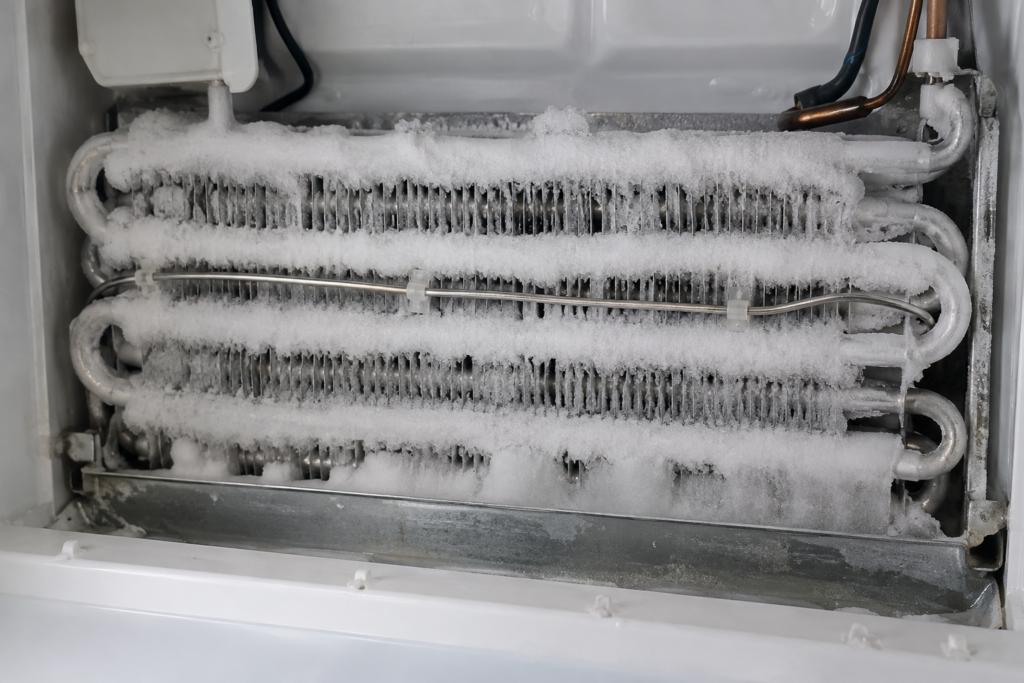
The symptoms it lists show the progression. Heavy frost forms on the evaporator coils, E3 appears on the display, both compartments cool less, and the compressor runs longer as it works against blocked airflow. Water leaking from under the unit is a stop sign, because ice blockage may have backed up into the drain.
Can You Do Anything Yourself Before Deciding?
Yes, and the first step helps whatever you decide. A manual defrost clears the frost blockage and gives the unit a chance to cool again while you work out the repair. The page describes unplugging the refrigerator and leaving both doors open for 24 to 48 hours with towels on the floor, using a fan directed at the evaporator to speed things up. It says never to use a heat gun.
- Move the food first — put frozen and chilled items in coolers or a second refrigerator before you unplug anything.
- Unplug and open both doors — lay towels on the floor, since the meltwater is considerable.
- Use a fan, not a heat gun — a heat gun can damage plastic parts and the evaporator.
- Plug back in and watch — note how long it takes for frost to return, and write the date down.
The page adds a diagnostic rule worth remembering. If the unit needs a manual defrost more than once a month, that alone is a reason to call a technician, because it means the heater or its circuit is not working.
Is a Dacor Refrigerator Defrost System Worth Fixing?
Usually yes, because the parts that most often fail are inexpensive and the alternative is a premium refrigerator with a recurring ice problem. The E3 page lists a typical professional repair from $250 and one to two hours of technician time, and rates only about 20 percent of cases as fixable by the owner. The final price is confirmed after on-site diagnosis, and you receive a written estimate before any work begins.
Whether it is worth it for your refrigerator comes down to four things:
- Which part failed — the page lists a burned-out heater, an open thermal fuse or thermostat and a defrost control board, in rising order of difficulty.
- The age and general condition of the unit — a first fault on a refrigerator that has otherwise run well is a repair, not a verdict.
- Any heat damage near the heater — the page lists damage to the evaporator housing near the heater terminals as a reason to call a professional.
- Whether the food is safe — the sooner you act, the less spoilage and strain on the compressor.
How Do You Tell Which Defrost Part Has Failed?
With a meter, and the page describes the tests, though it puts them in the hands of someone comfortable working on the unit. With the refrigerator unplugged, a technician reaches the evaporator, finds the heater element and tests it for continuity. No beep means the heater is open and must be replaced. The thermal fuse, clipped to the evaporator shroud, is tested the same way, and an open fuse is a single-use safety device that needs replacing.
The order of testing follows the circuit, and it is why a technician can usually name the failed part within the visit:
- Look at the evaporator first — the frost pattern shows whether the whole coil or only part of it has stopped defrosting.
- Test the heater for continuity — it is the part most often burned out.
- Test the thermal fuse or defrost thermostat — an open one stops the heater getting power even though the heater is fine.
- Check the control side last — if both parts test good, the board that starts the cycle is the suspect.
The first three stages need no information beyond the unit itself, so photographing the frost and noting when E3 appeared helps the visit go faster.
One rule from the page is worth understanding because it affects the bill: always replace the thermal fuse when replacing the defrost heater, to avoid a repeat failure. Part numbers vary by model, so confirm yours before anything is ordered. If the heater and fuse test fine and E3 persists, the defrost control board or the main board is the next suspect, and that is where the repair becomes a bigger decision.
When to Repair and When to Think About Replacing
Repair when the cause is a heater or a fuse and the refrigerator is otherwise reliable. Think harder when the cause is a board, when there are signs of heat damage, or when the unit has already had other repairs. The page says a technician is needed if the evaporator housing shows heat damage near the defrost heater terminals.
Our refrigerator repair cost guide puts a defrost fault beside the other common ones, and the refrigerator E codes guide explains the neighboring codes. A related fault is the FF freezer fan code, which can look similar from the outside.
Our refrigerator repair service covers the defrost system, and the site's temperature alarm notice helps you keep an eye on the cabinet in the meantime. When you are ready, book a visit or send us the model number and a photo of the frost.