 Denys Hargrove
 Key Takeaways
- A Dacor range membrane panel is worth fixing in most cases where the rest of the range is sound.
- A discontinued part number does not end the repair: newer panels, tested used panels, or a ribbon cable repair may still be available.
- Keys that stop working as the oven warms point at a heat-sensitive connection, not necessarily the keypad itself.
- A panel that starts functions on its own is a safety issue; switch the oven off at the breaker.
- When the panel is the third or fourth failing part, compare the combined cost with replacement.
The Bottom Line
Fix the panel when it is the only thing wrong with a healthy range, and stop when it is one of several parts failing together. Have the keypad, cable, and board checked before a part is ordered.
A membrane control panel fails in a way that feels unfair. The range cooks perfectly, nothing smells or leaks, yet half the keys no longer respond, or the display shows numbers that make no sense. Owners of older Dacor ranges also find that the exact panel for their model is hard to source, and that is where the real question starts: is it worth fixing the panel, or is this the moment the range has to go?
| What the panel is doing | What it points to | Fixing it usually makes sense when |
|---|---|---|
| One or two keys dead, rest work | Worn contact area under the membrane | The range is otherwise healthy |
| Keys register by themselves, beeping, settings change | Moisture or a shorted membrane layer | The panel can be replaced, not just dried |
| Whole panel dark, oven still has power | Ribbon cable or connector fault | A technician confirms the cable, not the board |
| Panel replaced once already and failing again | Heat or moisture reaching it again | The cause is found, not just the symptom |
What Is a Membrane Panel, and Why Does It Fail?
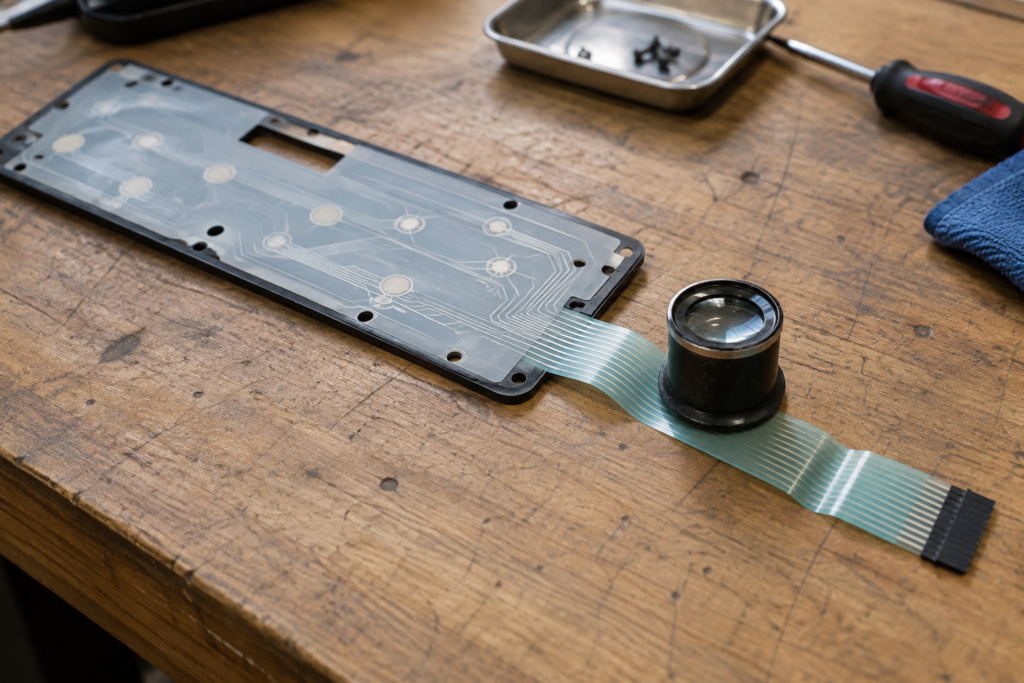
A membrane panel is the flat, sealed keypad on the front of the range, a thin printed layer that sits over contacts and tells the control board which key you pressed. It fails because it lives at the hottest and wettest spot on the range: right above the oven door, within reach of steam, spills, and the cleaning spray people use on the glass next to it. Over years the printed layer wears at the keys you use most, the adhesive loosens, and moisture creeps under the edge.
The panel itself is a simple part, but it is often bonded to a faceplate and connected to the board with a thin ribbon cable. That is why a technician can usually tell within minutes whether the keypad, the cable, or the board behind it is at fault, and why the answer matters so much for whether the repair makes sense.
Is a Dacor Range Membrane Panel Worth Fixing?
Yes, in most cases where the rest of the range is sound, because a panel is a small part of the value of a Dacor range and a new range is a very large purchase. A range that bakes evenly, holds its burners, and has no other faults is worth keeping, and a keypad that works again is a cheap way to keep it. The balance tips the other way when the panel is only the first of several failing parts, or when the exact panel is no longer made and every source is a used one.
Our general guide on whether a Dacor range is worth repairing covers the whole-range decision. This article is narrower: it is about the keypad alone and how to judge it.
What If Your Panel Has Been Discontinued?
A discontinued panel does not automatically mean the range is finished. Owners often hold the part number from an old repair and find it listed as unavailable, but there are usually three ways forward, and a technician can tell you which one your range allows.
- A newer replacement panel that carries the same function even when the printed part number has changed.
- A tested used panel from the same series, which works only if its contacts are still good.
- Repairing the connection when the keypad is fine and only the ribbon cable or connector has failed.
Be wary of a panel that arrives with no testing and no return option. A keypad from an unknown range may have the same worn contacts that failed on yours, and you only learn that after paying for the visit to fit it.
Can You Tell Whether It Is the Panel, the Cable, or the Board?
You can narrow it down, though a technician confirms it. Watch what the range does when you press the same key several times and note whether the pattern is stable.
- The same keys fail every time and others work: the keypad is worn in that area.
- Keys work for a few minutes, then stop as the oven warms: a heat-sensitive connection, often the ribbon cable.
- The display is garbled but the keys are quiet: a display or board fault, not the keypad.
- The range beeps or changes settings on its own: moisture under the membrane or a shorted layer.
Never spray cleaner directly onto the keypad, and do not run the oven with a panel that starts functions on its own. An oven that turns itself on is a safety issue, not a nuisance. Switch it off at the breaker and book a visit.
What to Ask Before You Approve a Panel Repair
A few questions turn a vague quote into a decision you can defend. They apply whether you are dealing with a technician, a parts supplier, or a repair company, and none of them needs technical knowledge.
- Which part exactly is being replaced: the keypad, the ribbon cable, or the board behind it.
- Is the replacement new, refurbished, or used, and is it tested before it is fitted.
- What happens if the new panel fails too, and how long the repair is guaranteed in writing.
- Whether the cause is addressed, for example moisture running down from the glass or heat reaching the cable.
- How the repair compares with the typical spread in our Dacor range repair cost guide.
Keep the model and serial number from the rating plate with you when you ask; the panel that fits a range from one year may not fit the next, even when the keys look identical.
When It Is Time to Stop Repairing the Panel
Stop when the panel is the third or fourth part to fail on the same range. At that point you are not repairing a keypad, you are paying to keep an aging control system alive piece by piece. A range with a failing panel, a drifting oven sensor, and a worn door seal is telling you that several parts reached the end of their life at once, and a replacement may be the cheaper path over the next few years. Our guide to repairing or replacing a Dacor range sets out that comparison.
The reverse is also true. A range under about twelve years old with one dead keypad and nothing else wrong is a strong candidate for repair.
Getting the Panel Looked At
Our Dacor range repair service checks the keypad, the ribbon cable, and the board behind it before anyone orders a part, so you pay for the one that is truly at fault. A diagnostic from $95 is credited toward the repair, and the final price is confirmed on site with a written estimate before work begins. Read about range igniter problems if clicking or burner issues come up at the same time, and when you are ready, schedule a visit with your model and serial number handy.