 Denys Hargrove
Key Takeaways
- E6 is rated low severity on this site, and the dishwasher will usually still run.
- The risk is dishes that look clean but are not, because water may not be heating as it should.
- Run hot water at the sink first, then a full cycle, to see whether E6 returns.
- A sensor that reads clean water as dirty needs replacing, and a corroded connector means a harness repair.
- Replacement of the dishwasher is rarely driven by a sensor alone: look at age, repair history and the custom panel.
The Bottom Line
Try hot water at the sink and a full cycle. If E6 persists, book a diagnosis that names the failed part, then weigh the written estimate against the age of the machine.
Is a Dacor dishwasher E6 turbidity sensor worth fixing? In most kitchens it is, because the sensor is a small part in a machine that is otherwise worth keeping, and the fault is rated low severity on this site. The dishwasher usually still runs with E6 showing, which makes it tempting to ignore until dishes start coming out wrong. This guide covers the sensor only, since the dishwasher as a whole is covered by our parent guide on whether a Dacor dishwasher is worth repairing. It sets out what the sensor does, how to tell a one-off from a failed part, and when the repair stops making sense.
| What you find | What it means | Worth fixing? |
|---|---|---|
| Sensor reads clean cycle water as dirty | The sensor has failed | Yes, replace it |
| Corrosion or damage at the sensor connector | The harness is the weak point | Yes, repair the harness |
| Dishes cold, cycles running three hours or more | Water may not be heating | Diagnose before deciding |
| E6 persists through several cycles | A fault, not a one-off | Decide on the written estimate |
What Does the Turbidity Sensor Do in a Dacor Dishwasher?
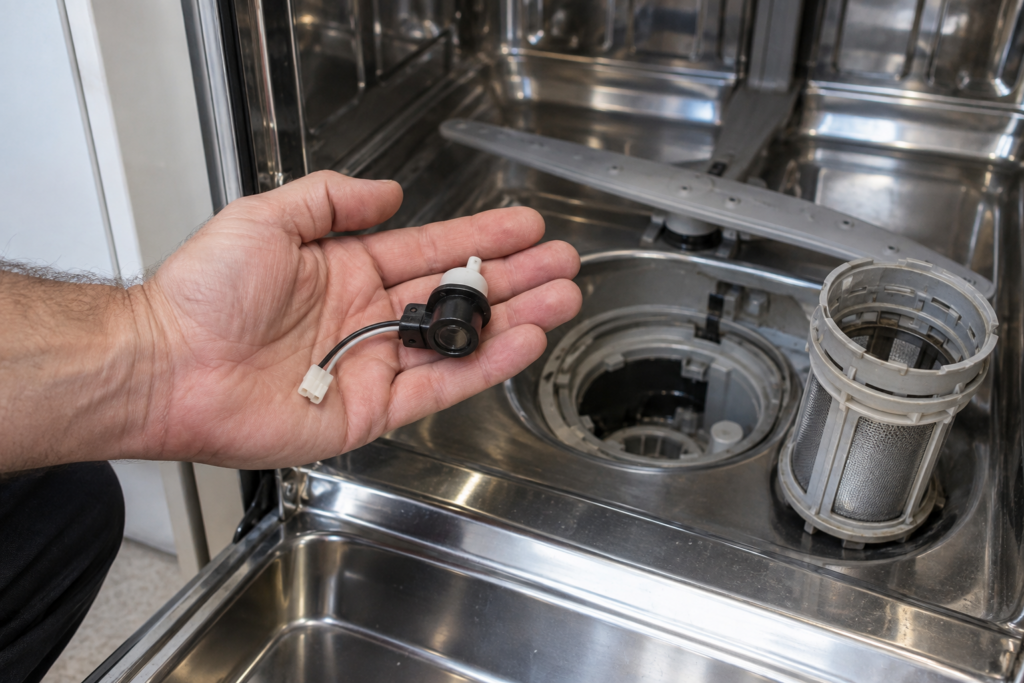
It tells the control board how dirty the water is, so the machine can judge how long to keep washing. Our E6 code page describes it as an optical sensor mounted in the sump area, and it names the code as a turbidity sensor fault. When the sensor misreads, the board loses the information it uses to decide, and it flags E6.
The fault is rated low severity and the page says the dishwasher will run, but that without adequate water heating dishes may not be fully sanitized or cleaned of grease. That is the thing to watch: not the code itself, but what comes out of the machine.
Is It Safe to Keep Running the Dishwasher With E6?
Yes, for a short time, with attention. The page says the dishwasher will run, and that running hot water at the kitchen sink before starting a cycle can compensate temporarily. It is not a safety fault like a leak or a gas smell. The risk is dishes that look clean and are not.
Stop and book a visit if any of these appear:
- The code persists through multiple cleaning cycles.
- The dishwasher stops mid-cycle every time it runs.
- Cold water mid-cycle, when opening the door shows the water is lukewarm or cold.
- Cycles that run three hours or more, as the board waits for the water to reach temperature.
How to Tell a Glitch From a Failed Sensor
The page lists a few checks that an owner can do, and a few that need a technician. The checks for owners come first.
- Run the kitchen hot water until it is fully hot before starting the dishwasher. The page says Dacor recommends a minimum incoming temperature of 120 degrees Fahrenheit.
- Run a full cycle and see whether E6 returns, since a one-off that does not come back needs nothing.
- Watch the end of the cycle, because the page notes that E6 often appears near the end, when the board attempts the heated rinse.
The page also describes testing the heater element's resistance with the breaker off, and that is a job for a technician, not a check to try at home. Our page puts E6 symptoms alongside water heating, so ask for a diagnosis that names the part. If the sensor reads clean water as dirty, it needs replacing, and if the sensor connector shows corrosion or damage, the harness is the repair.
What the Repair Visit Involves
A technician works through the sensor first, then the wiring, then the water heating that the same code page raises, so that nothing is replaced on a guess. The sequence is short, and it is the reason the visit is rated at 30 to 45 minutes.
- Reading the sensor on a clean cycle — water that is clearly clean should read as clean.
- Inspecting the connector and harness for corrosion or physical damage near the sensor.
- Checking the water heating, including the element and the relay that powers it, when the symptoms point there.
- Replacing the part and running a full test cycle to confirm E6 does not return.
If the technician finds that heating is the real fault, the repair becomes a different job with a different part, and the estimate should say so before work starts.
Habits That Cut Repeat Faults
Sensors sit in the sump, where everything the dishwasher washes off eventually passes, so the habits that protect them are about what goes in and what stays behind.
- Scrape plates first so heavy food waste does not end up in the sump.
- Run the hot tap before a cycle so the machine does not spend the first minutes on cold water.
- Keep the filter area clear following the routine in the maintenance guide for your model.
- Do not overfill the rinse aid dispenser, a point our rinse aid notice covers.
None of these will rescue a failed sensor, but they keep a new one working and make the next cycle easier to read.
How Much Does an E6 Repair Cost?
Our E6 page puts it from $120 with a professional visit of 30 to 45 minutes, and the final price is confirmed after diagnosis on site, with a written estimate before work begins. It is one of the lower figures in the dishwasher codes, which is part of why the repair is usually worth doing.
Our Dacor dishwasher repair cost guide has the wider table. Ask the technician to say which of three things was found, the sensor, the connector or the heating side, so that the estimate lists the part that failed.
When Replacing the Dishwasher Is the Better Call
Rarely because of a sensor, and the way to test that is to ask what else is wrong with the machine. A dishwasher with one clean, diagnosed fault is a repair candidate at almost any age. One with a long service history is a different matter. The parent guide gives the decision factors: age, the number of repairs, and whether several parts fail together. It says a tub crack is the one failure that makes replacement the clear answer, and that repair wins in most cases on a unit under ten years old.
- Several faults at once on an old machine tip the balance towards replacement.
- Three or more service calls in a year suggest the unit is in decline.
- A matching custom panel is worth keeping, since a new dishwasher means finding a new panel.
The routine care in our Dacor dishwasher maintenance guide keeps the sump and sensor area clear. The dishwasher repair service covers sensors, pumps and boards. You can book a visit or send us the model number and what the dishwasher shows.