 Denys Hargrove
Key Takeaways
- On a Dacor DRR24 or DRR30 column refrigerator, E1 is a sensor fault, E3 a defrost fault, E4 an evaporator fan fault and HI a high-temperature alarm.
- Column repairs start from $275, with the final price confirmed after diagnosis, and most are technician jobs.
- Move perishables out when a code is active, because temperature control may already be lost.
- A single sensor, fan or defrost fault on a sound column is usually a repair.
- Repeated faults, a cause in the sealed system or a blocked surround point toward weighing replacement.
The Bottom Line
Move the food, note the code, and repair a single contained fault on a sound column. Check ventilation clearances before spending on either route.
A column refrigerator is not a freestanding fridge with a different shape. It sits flush in a run of cabinetry, enclosed on several sides, and that changes the repair-or-replace sum in two ways: the unit is harder to remove and replace than a freestanding fridge, and the way it is built in affects how hard the cooling system has to work. This guide is about the Dacor DRR24 and its larger sibling, the DRR30, which this site covers with a set of dedicated codes. It sets out what each code means, what a repair covers, and the signs that point toward a new column instead.
| Code on the display | What it means on a column unit | Lean toward |
|---|---|---|
| E1 | Cabinet temperature sensor failure | Repair; a sensor or connector is often the cause |
| E3 | Defrost system failure | Repair on a sound unit |
| E4 | Evaporator fan failure | Repair; a fan motor is a contained fault |
| HI that clears after loading or closing the door | A temporary rise, not a fault | Neither; fix the cause |
| HI that persists with the compressor running | An underlying cooling fault | Get a diagnosis, then weigh the age |
What Do the Column Refrigerator Codes Mean on a Dacor DRR24?
Four codes cover the column units, and they do not mean the same as the identical codes on the French door models. This site's E1 page makes that point directly, noting that the column unit's sensor is a different part from the one on the DRF36 and DRF42.
- E1 — a cabinet temperature sensor failure, so the board cannot regulate and the compressor may run without cycling.
- E3 — a defrost system failure, which lets frost build on the evaporator.
- E4 — an evaporator fan failure, which leaves the compressor making cold that is not distributed.
- HI — a high-temperature alarm, which may be a temporary spike or a sign of a deeper cooling fault.
All four pages list the repair at from $275 and a professional visit of 60 to 120 minutes, and they rate the do-it-yourself share at about 15 percent, so these are largely technician jobs. The final price is confirmed after diagnosis on site, with a written estimate before work begins.
Is It Safe to Keep Food in a Column Refrigerator With an Active Code?
Not for long. The E1 page says an active code means temperature regulation has been lost and to move perishables to another refrigerator, and the E4 page says that without the evaporator fan the column cannot hold safe temperatures and may fail within hours. HI is the one code you can silence by pressing a panel button, but the alert only clears once the cabinet is back in range and the cause still has to be found.
That urgency matters to the decision. A fault that is putting food at risk is not one to leave while you deliberate, so move the contents first and weigh the repair afterward.
Dacor DRR24 Column Refrigerator Repair or Replace: The Short Version
Repair when one contained part has failed and the column is otherwise sound. A thermistor, a fan motor or a defrost component is a single repair, and the unit goes back to what it was. Replace when the faults stack up, when the cause is in the sealed cooling system, or when the column has been working hard in a poorly ventilated surround.
- One sensor, fan or defrost fault on a sound column: repair.
- Two or more of E1, E3 and E4 together: get the full quote before deciding, since each can mask another.
- HI that persists with the compressor running and a clear door: have it diagnosed before spending, because the cause may be in the cooling system.
- Repeated faults within a year or two: weigh the whole unit.
What You Can Check Before Deciding
A few free checks, taken from the code pages, can turn a replacement worry into a minor repair or confirm that a technician is needed. None of them needs more than the panel and a clear head.
- Power-cycle the column for about 60 seconds. If E1 clears and does not return within 30 minutes of normal compressor cycling, the fault was transient.
- Give HI time after a big shop. The page allows two to three hours for the unit to recover, and suggests loading in batches rather than all at once.
- Run your hand around the door gasket with the unit running, since cold air escaping points to a seal failure instead of a cooling fault.
- Defrost for 12 to 24 hours with the door open if E4 may be ice around the fan blade, then see whether the blade turns freely before you restore power.
If the code returns within one compressor cycle of a reset, stop. The pages treat that as the point where the fault is real and needs a technician. Heat-damaged wiring near the sensor or board is another reason to stop and not to carry on testing.
Does the Cabinet Around the Column Matter?
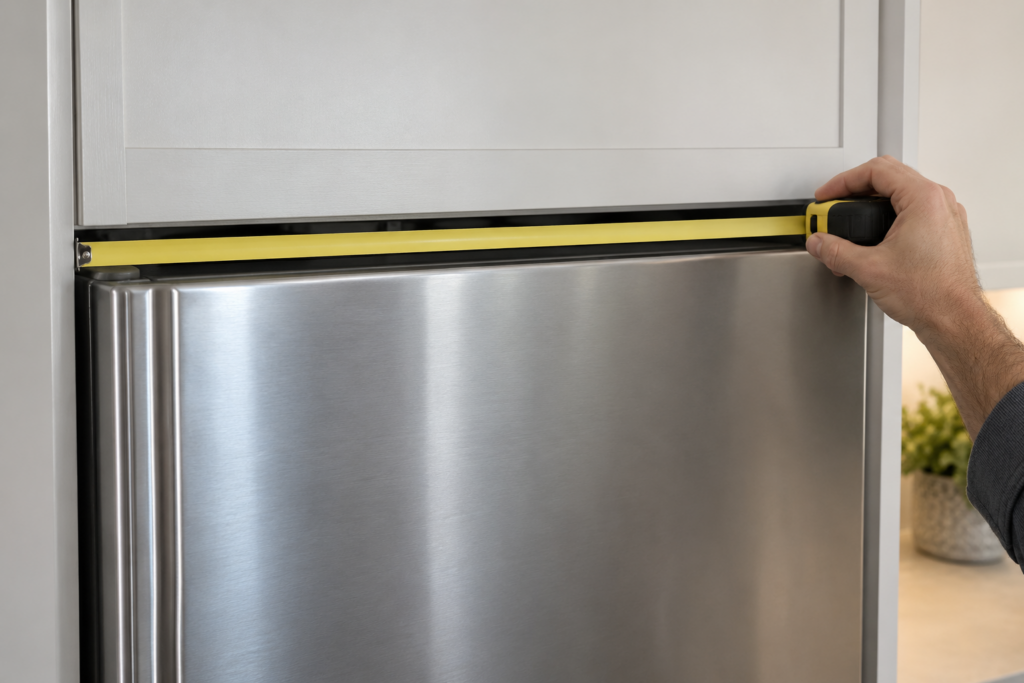
Yes, more than most owners expect. This site's ventilation clearance notice says built-in columns risk heat building up if the toe-kick openings are blocked or the upper vent is covered, and that poor airflow raises cabinet temperatures and stresses the sealed refrigeration system. Warm cabinetry above the unit, longer compressor cycles and an unusually loud compressor are its warning signs.
- Keep the toe-kick grille clear of dust and debris, and clean it with the condenser area every six months.
- Check the top vent gap against the installation manual's minimum.
- Do not cover the ventilation areas with decorative panels or trim kits.
This is relevant to replacement as well as repair. A new column in the same cramped surround will have the same problem, so correct the clearance before you buy.
What Replacement Involves on a Built-In Column
Replacing a column is more than rolling a new fridge into place. It is removed from a cabinet opening, and the new unit has to match the cutout, the panel arrangement and the ventilation gaps. That extra work is worth counting before you decide, because it can add to the cost of the replacement route in a way a freestanding fridge would not.
Our wider guide on Dacor refrigerator repair or replace sets out the general thresholds, and Dacor column refrigeration repair cost puts the column repairs side by side. If a fan is the culprit, our freezer fan motor repair or replace guide explains how that decision goes.
Booking the Visit
Tell the technician the model, the code, whether the compressor is running, and how the column is installed. Our column refrigeration repair service covers the sensors, fans and defrost parts. When you are ready, book a visit or send us the model number and the code on the display.