 Denys Hargrove
 Key Takeaways
- Dacor freezer fan motor repair or replace usually favors repair on a built-in column unit under eight to ten years old with no other major faults.
- F4 means the evaporator fan motor has failed on DRZ24 and DRZ30 models — the freezer keeps running but stops circulating cold air evenly.
- Items near the front softening while the rear wall stays frozen is the fan fault's signature pattern, worth reporting exactly as you notice it.
- Ice buildup around the fan housing can mimic a failed motor, which is why F3 (defrost) is worth ruling out alongside F4.
- A built-in column freezer's installation makes replacement more involved than a freestanding unit, which tips the arithmetic toward repairing a single confirmed part.
The Bottom Line
Repair a confirmed fan motor fault on a column freezer that is otherwise sound — it is a contained job for a technician and rarely the deciding factor on its own. Weigh full replacement only once other repairs have started stacking up.
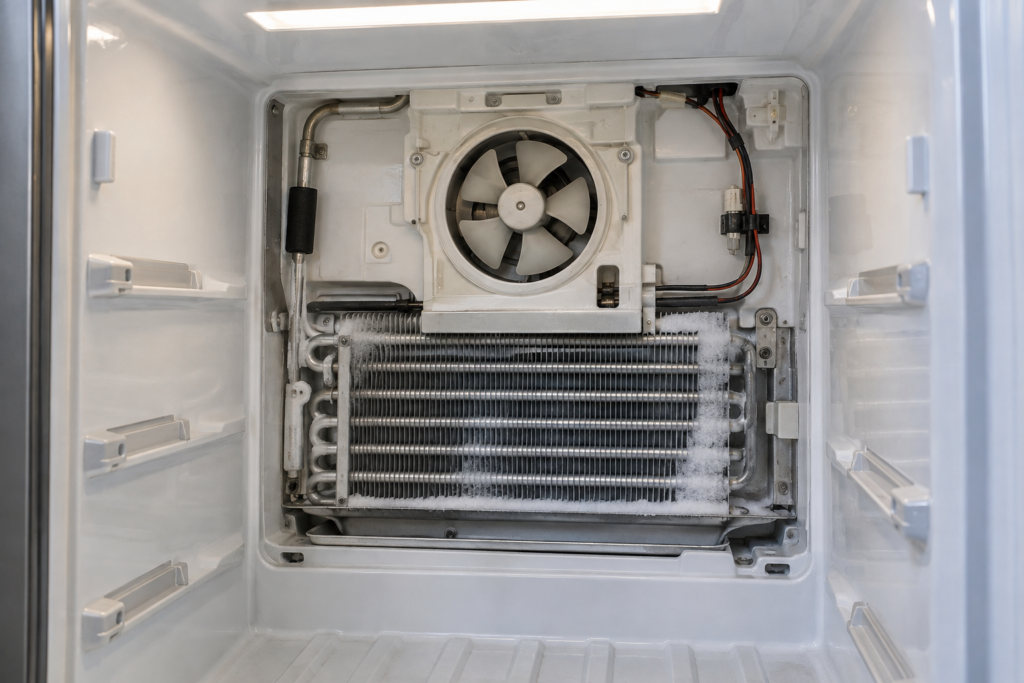
A single failed fan raises a narrower question than "should I replace the whole freezer," separate from that bigger decision, because the evaporator fan is a single, well-defined part with a single, well-defined job. On a column freezer, that fan is what pushes cold air from the evaporator coil out into the compartment, and when it fails, the freezer usually keeps running — it just stops circulating the cold air it is still making.
| Situation | Repair the fan | Consider replacing the freezer |
|---|---|---|
| Freezer age | Under 8–10 years | Past 10–12 years |
| Other symptoms | Fan fault is the only issue | Defrost or sensor faults also present |
| Model | DRZ24 or DRZ30 column unit | Basic unit near end of expected life |
| Repair history | First significant repair on this unit | Second or third major fault |
Dacor Freezer Fan Motor Repair or Replace: Which Makes Sense?
Repair the fan motor if the freezer is otherwise sound — a single confirmed fan fault on a unit under eight or ten years old, with no history of defrost or sensor repairs, is a straightforward and worthwhile fix. A column freezer is a built-in appliance integrated into cabinetry, which makes a like-for-like replacement more involved than swapping a freestanding unit, and that installation reality tips the arithmetic further toward repairing a single confirmed part.
Replacement earns real consideration once the freezer has needed more than one significant repair, or once it is old enough that other components — the defrost heater, the door seal, the control board — are statistically due for their own faults soon. A fan motor on its own is rarely the deciding factor; it is the fan motor arriving as the second or third repair on an aging unit that changes the calculation.
What Does the F4 Error Code Mean on a Dacor Freezer?
The F4 fan motor fault code means the evaporator fan motor has failed on DRZ24 and DRZ30 column freezer models, and the pattern owners describe matches that diagnosis closely: the freezer still runs and still produces cold air at the evaporator coil, but items near the front of the compartment start softening while items directly against the rear wall, closest to the coil, stay properly frozen. That uneven pattern is the fan fault's signature, and it is a useful detail to report exactly as you notice it.
F4 sits alongside three related codes on this freezer line: F1 is a sensor fault, F3 is a defrost system fault, and F4 is the fan. All three can produce a freezer that is not holding its target temperature evenly, which is why the code — not the general symptom — is what actually narrows the diagnosis.
How Do You Know the Fan Is Actually the Problem?
A few checks help confirm the pattern before you book a visit, all of them safe to do without opening the sealed system:
- Listen at the freezer's rear interior wall for a faint hum or airflow sound — silence where you expect to hear the fan running is a strong signal.
- Compare temperatures front to back in the compartment using a simple thermometer, rather than judging by touch alone.
- Check for ice buildup around the fan housing, since a fan blocked by frost can produce the same symptom as a genuinely failed motor.
- Note whether the freezer's compressor still runs normally, which rules out a sealed-system fault and narrows things back to airflow.
- Confirm the freezer's door is sealing properly, since a bad seal can also cause uneven temperatures that look like a fan fault at first glance.
- Check the door gasket for gaps by closing it on a piece of paper and testing whether it pulls out with resistance evenly around the frame.
A fan confirmed not running at all, with no ice blocking it, is a motor replacement. A fan buried in frost from a defrost system that is also struggling is a different — and sometimes larger — repair, which is why the F3 defrost code is worth ruling out alongside F4 rather than assumed away. The full list of codes for this freezer line, including F1, PF, and HI, sits in the freezer error code archive, and it is worth checking whether more than one has appeared recently before assuming this is an isolated fault.
How Does a Fan Motor Repair Compare to Other Freezer Repairs?
A fan motor sits in the middle of the cost range for this freezer line — more involved than a simple sensor swap, less involved than a sealed-system repair on the compressor side. Every visit starts with the same diagnostic, from $95, credited toward the repair once you approve the written estimate, because the exact cost depends on whether the fan motor alone is at fault or whether ice buildup points at a defrost heater that also needs attention. Confirming that up front avoids paying for a fan motor only to have the same uneven-cooling symptom return a few months later from an unrelated cause.
What This Repair Involves, and Why It Is Not a DIY Job
The evaporator fan on a column freezer sits behind an interior panel near the rear wall, in the same compartment as the evaporator coil itself. Reaching it means removing shelving and the rear panel without damaging the coil fins behind it, and reinstalling the fan and its housing so airflow is not restricted afterward. It is a contained repair for a technician who does this daily, and a good way to bend a coil fin or misalign the housing for anyone attempting it without the right approach.
- Note the exact symptom pattern — which shelves are affected and which stay cold — before your visit.
- Avoid forcing frost off the fan housing yourself with a tool; let a technician confirm what is ice and what is a stuck part.
- Keep the freezer door closed as much as possible in the meantime to slow the temperature drift while you wait.
- Ask whether F1 or F3 were also checked during the same visit, since a shared root cause is possible.
- Move anything sensitive to freezer burn toward the rear wall temporarily, closer to the coil, while you wait for the visit.
- Keep the freezer's model and serial number ready, since fan motor part numbers differ between DRZ24 and DRZ30 units.
Getting the Right Diagnosis Before You Decide
Our column refrigeration repair cost guide gives a useful sense of where a fan motor repair sits against other common faults on built-in cold-storage columns, even though it covers the refrigeration side rather than the freezer specifically. If this freezer sits alongside a full-size refrigerator that has needed its own attention, our refrigerator repair or replace guide walks through the same kind of decision for that appliance. Our Dacor freezer repair service diagnoses the fan, the defrost system, and the sensors together, with a diagnostic that starts from $95 and is credited toward the repair once you approve the estimate. If your freezer is showing F4 and items are visibly softening, book a visit rather than waiting to see whether the pattern spreads further into the compartment.