 Denys Hargrove
Key Takeaways
- Remove and wash baffle or mesh filters monthly if you cook daily.
- Hot soapy water or a heavy dishwasher cycle works, and the filters must dry fully before they go back.
- Reset the filter indicator light after cleaning, following the control panel instructions.
- Charcoal recirculation filters cannot be washed and the ductwork needs an annual inspection.
The Bottom Line
Wash the filters monthly, dry them fully and reset the indicator. Look at the ductwork once a year, and call a technician if grease builds up beyond normal cleaning.
Hood filters are the cheapest protection in a kitchen and the easiest to forget. They catch the grease that would otherwise coat the blower and the duct, and when they are full, the hood still runs and still sounds fine while it moves far less air than it should. The site's range hood filter maintenance notice warns that saturated filters choke the hood, put grease where it can burn and push fumes back into the room. This guide covers Dacor vent hood filter cleaning from the schedule to the part many owners struggle with, which is getting the filters back in afterward.
| Task | How often | What it protects |
|---|---|---|
| Wash baffle or mesh filters | Monthly if you cook daily | Airflow, and grease dripping back onto the cooktop |
| Reset the filter indicator light | After each cleaning | An accurate reminder for next time |
| Inspect the ductwork | Once a year | Grease buildup in joints and elbows |
| Replace charcoal recirculation filters | Every three to six months | Odor control on ductless installations |
How Often Should You Clean a Dacor Hood Filter?
Monthly for a household that cooks daily. The notice says to remove baffle or mesh filters monthly in that case, and the interval can stretch if you cook less. If you fry, sear or use a wok often, treat monthly as the longest interval rather than the typical one.
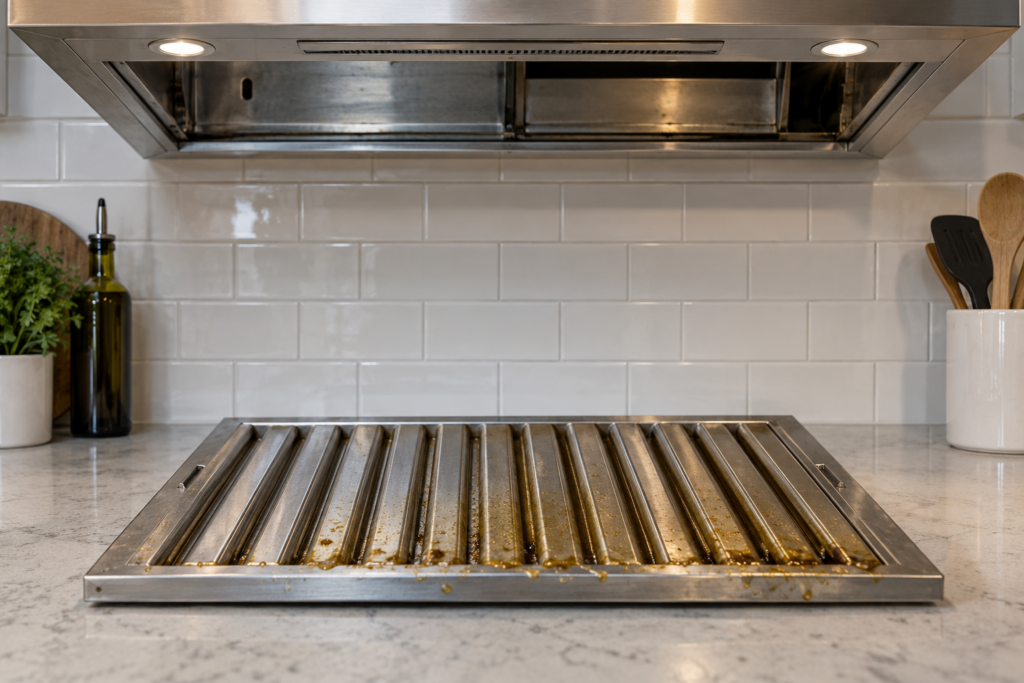
The hood tells you when it needs attention too. The notice lists the warning signs: grease dripping from the filter surface, smoke that lingers in the kitchen even with the hood on high, an illuminated filter indicator light and cooking odors spreading through the home. Any of them means the filters are overdue.
How Do You Clean the Filters?
In hot soapy water, or in the dishwasher on a heavy cycle. That is the notice's method, and either works. The steps matter more than the method:
- Turn the hood off and let it cool — and switch off the light if the filters sit near it.
- Remove the baffle or mesh filters — one at a time, so you remember which goes where.
- Soak or wash them — hot water and degreasing dish soap, with a soft brush on the grease-laden edges.
- Rinse and let them dry fully — the notice says to allow them to dry fully before reinstalling.
- Wipe the tracks and the visible hood interior — a cloth with the same soapy water is enough.
- Reinstall and reset the indicator — reset the filter light after cleaning, following the control panel instructions.
Why Won't the Filters Go Back In?
Usually because a filter is not oriented the way it came out, a track is gummed up with grease, or the filter has been bent. The notice does not describe reinstalling, and the right method differs between hood models, so this is general advice and your hood's manual comes first.
- Check the orientation — filters often have a front and a back, and a handle or latch edge that must face a certain way. Look at the other filter in the hood before you remove the second one.
- Seat the rear edge first — on many hoods the filter slides into a channel at the back before the front edge swings up and locks.
- Wipe the track — old grease in the channel stops a filter from sliding, and a damp cloth clears it in seconds.
- Look for bends — a filter dropped in the sink or washed hard can warp, and a bent frame will not seat flat.
- Do not force it — if it needs force, something is out of line, and breaking a latch costs more than a few minutes of looking.
If a filter is bent or a latch is broken, a replacement is the answer. A filter that will not seat also does not seal, so the hood will draw air around it instead of through it.
What Happens When the Filters Are Neglected
A saturated filter does damage in a sequence, and knowing it explains why a few minutes a month is worth it. The notice describes the first two steps, and the rest follow from them.
- Airflow drops — the hood pulls less air through a grease-coated filter, so smoke and steam stay in the room.
- Grease drips back — the notice says saturated filters can drip grease onto the cooktop, which is a hazard during high-heat cooking.
- The duct liner collects grease — what the filter does not catch travels on and lines the ducts, where it presents a serious fire hazard.
- The fan works harder — a hood pulling against restriction runs with more strain, and the fan wheel gathers grease and can become unbalanced and noisy.
The site's range hood fan noise guidance points the same way: a grease-loaded fan wheel is a common cause of rattling, and clean filters play a bigger part in preventing it than owners expect. A monthly wash is the cheapest part of the whole system to maintain, and it is the only part that most people can do without a tool.
It also helps to match the routine to how you cook. A household that grills indoors, fries often or cooks with a lot of oil will fill a filter faster than one that mostly bakes and steams, and the monthly figure in the notice is for households that cook daily. A lighter cook can stretch it and a heavier one should shorten it. Check the filter surface after a heavy cooking weekend, and wash it then rather than waiting for the calendar.
Charcoal Filters and the Ductwork
Two parts of a hood cannot be cleaned the way the grease filters can. Charcoal recirculation filters, used in ductless installations, cannot be washed and must be replaced every three to six months depending on how often you cook, according to the notice. And the ductwork needs an annual inspection, because grease collects at joints and elbows over time.
The notice says heavy buildup inside the duct liner presents a fire hazard that filter cleaning alone cannot address. If the hood sounds normal but the smoke does not clear, the duct may be the problem, and the VENT-BLOCK code page lists a stuck exterior damper and grease inside the duct among the causes. It also says that a clean, well-seated filter should be checked first, because a clogged one can mimic a blocked duct.
When Cleaning Is Not Enough
Call a technician if the filter housing or the duct liner shows grease buildup beyond normal cleaning, which is the notice's own line. Also call if the fan is noisy or weak after the filters are clean. Our range hood repair service covers grease filter track and baffle cleaning as well as blower and control work. Diagnosis starts from $95, and the final price is confirmed after on-site diagnosis, with a written estimate before work begins.
Our range hood light and reset guide covers the related reset routine, and the range hood worth repairing guide helps if the hood is old. When you need a visit, book it here or send us the model number and what the hood does.