 Denys Hargrove
Key Takeaways
- Fill the Dacor dishwasher rinse aid dispenser only to the MAX line, since overfilling releases rinse aid early.
- Overfill is a common cause of foam, streaky glassware and poor drainage because suds can impair the pump and drain.
- The release setting runs from level one to five with a default of three, and should only be lowered if foam or streaks appear.
- Wipe up spills, run a short rinse-only cycle to clear foam, and then lower the setting if suds persist.
- If water still stands in the tub after the foam is gone, it is a drain fault and needs a technician.
The Bottom Line
Fill to the MAX line, wipe up spills and keep the release setting at the default unless foam or streaks show up. Standing water that outlasts the foam needs a technician.
Foam inside the tub, a film on the glasses and a puddle at the bottom after the cycle are three complaints that look unrelated, and in a Dacor dishwasher they often share one small cause. The rinse aid compartment was filled too far. It feels like the safe mistake, since more rinse aid sounds better than less, but the dispenser is calibrated for a specific fill level, and an overfilled one releases concentrated rinse aid into the wash too early. The result is over-sudsing that can load the pump and drain system. This guide covers the right level, the dispenser setting and the quick clean-up when it has gone wrong.
| What you notice | What it suggests | What to do |
|---|---|---|
| Foam inside the dishwasher during or after a cycle | Too much rinse aid released early | Run a short rinse-only cycle, then lower the setting |
| Filmy or streaky glassware | Excess rinse aid left on the dishes | Lower the dispenser level and check the fill |
| Standing water after the cycle | Suds impairing the pump and drain | Clear the foam; call if it persists |
| Indicator shows full straight after refilling | Dispenser overfilled | Wipe up and refill only to the MAX line |
How Much Dacor Dishwasher Rinse Aid Should You Add?
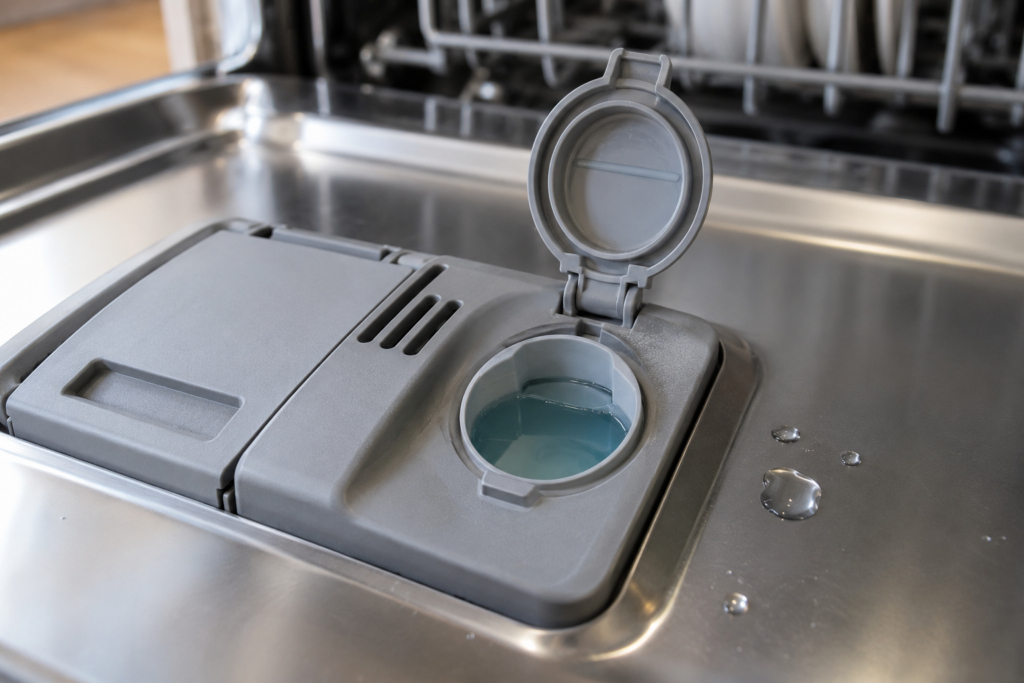
Fill it only to the MAX line marked inside the dispenser cap, and no further. This site's rinse aid overfill notice is clear on the point, and it explains why: the dispenser on DDW-series machines is factory-calibrated for a particular fill level, so a fuller one does not give better rinsing, it gives early release.
Wipe away any spillage straight away with a dry cloth. Rinse aid that runs down the outside of the dispenser gets into the tub on the next cycle, and it is a quiet way to cause the same foam without having overfilled at all.
Can Too Much Rinse Aid Cause Standing Water?
Yes, indirectly. The notice calls overfill a common cause of excessive foam, poor drainage performance and residue on glassware, and says the over-sudsing can impair the pump and drain system. That is the link between a bottle on the counter and a puddle in the tub, and it is easy to miss because the water seems to be a plumbing problem.
Before you go looking for a blocked drain, check the foam and the rinse aid level. Standing water with visible suds usually points to this, while standing water with a clean tub points to a real drain fault, which our Dacor dishwasher not draining guide covers, along with the E22 filter and drain code.
What Does the Rinse Aid Dispenser Setting Do?
It controls how much rinse aid is released in each cycle. On DDW-series machines the notice says the release setting ranges from level one to level five, with a factory default of level three, and it recommends reducing the setting only if streaking or foam appears. That makes the fill line and the setting two separate controls, and mixing them up is a common mistake.
- Start at the default level and leave it there unless the dishes tell you otherwise.
- Lower the level by one step if you see foam or streaks, and run a few loads before changing it again.
- Raise it only if dishes still show spotting after a few loads at a correct fill.
- Change one thing at a time, so you know which adjustment made the difference.
Clearing the Foam After an Overfill
If you have already overfilled, the cleanup is short. The notice suggests wiping up any spillage and running a short rinse-only cycle to clear the excess foam from the tub. Then lower the dispenser setting if suds persist.
- Wipe the dispenser and the door edge with a dry cloth to remove spilled rinse aid.
- Run a short rinse-only cycle with an empty tub to flush out the foam.
- Lower the release level by a step if the sudsing returns.
- Check the drain afterward by seeing whether the water leaves the tub normally.
If drainage problems continue after the foam has gone, the notice says to call a technician. That is the point where a real fault is more likely than a rinse aid issue.
A Five-Minute Check Before Blaming the Drain
Because the symptoms overlap with a real drain fault, a short routine sorts the two before you spend anything. It uses only what the notice describes, and it takes about as long as a cycle of rinsing.
- Look into the tub after the cycle and note whether there is foam on the surface of the water.
- Check the fill line in the dispenser and see whether the rinse aid reaches past the MAX mark.
- Note the release setting, and whether anyone has raised it above the default.
- Run a short rinse-only cycle and watch whether the water leaves the tub normally.
- Repeat the test the next day with the level and setting corrected, to see whether the puddle has gone.
If the tub drains cleanly after the foam is gone, rinse aid was the cause and you have fixed it for the price of a cloth. If it still stands, the drain is the next suspect.
The Monthly Dispenser Habit and Switching Brands
A little routine care keeps the dispenser accurate. The notice recommends wiping the rinse aid cap gasket monthly with a damp cloth, to stop rinse aid seeping past the seal.
People change rinse aid for price or availability, and the notice has a precaution for that. Run one empty normal cycle before loading dishes, so residue from the old product does not react differently with the new formula. A few other habits help the changeover go smoothly.
- Use up or drain the old product before you add the new one, rather than topping up.
- Keep the same release level at first, and adjust only after a few loads.
- Watch the first two cycles for foam or streaks, since that is when a mismatch shows.
The detergent side has its own care routine. Our notice on detergent dispenser care covers hardened residue around the latch, and the two together make a short monthly job. The wider routine is in our guide to Dacor dishwasher maintenance.
When to Call a Technician
Call when foam is gone and the dishwasher still leaves standing water, or when the dispenser itself looks cracked or stuck. Those are not rinse aid problems. Tell the technician what you filled, to what level, and what the setting is. Our dishwasher repair service covers drain, fill and dispenser faults, and the price is confirmed after diagnosis on site, with a written estimate before work begins. When you are ready, book a visit or send us the model number and what you see in the tub.