 Denys Hargrove
 Key Takeaways
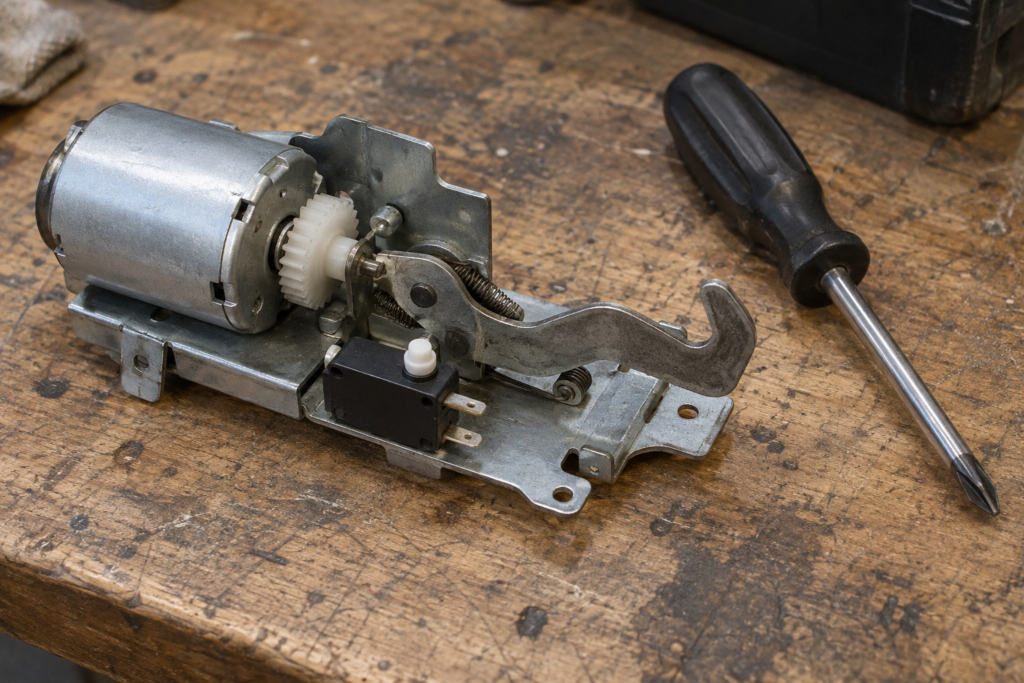
- Dacor oven door latch repair or replace is nearly always a repair: the latch is a small assembly of a motor, a hook, and a microswitch.
- F5 is the door lock assembly fault and F6 is the latch position switch circuit; both stop self-clean from starting.
- Never force a stuck door; the F5 page warns it can break the latch arm and escalate the repair.
- Wiping grease from the strike plate with the oven cool and the breaker off is the one safe owner check.
- Replacement comes into view only when the latch fails alongside several other parts on an aging oven.
The Bottom Line
Repair the latch when the oven otherwise cooks well, and do not force the door. Compare with replacement only when the latch is one of several failing parts, and ask for a written estimate first.
Owners weighing Dacor oven door latch repair or replace for a door that will not unlock usually find that the latch itself is the cheap part. It is a small assembly with a motor, a hook, and a microswitch, and it is the only thing between a self-clean cycle and a door that opens at the wrong moment. When it fails, the oven stops being a reason to replace the whole appliance and becomes a question of which small part gave up.
| What the door does | Code often shown | Repair or replace the latch? |
|---|---|---|
| Self-clean cancels within two minutes | F5 | Clean the strike plate first; repair the latch if it persists |
| Door stays locked after cleaning | F5 | Do not force it; repair the motor or switch |
| Lock icon flickers or stays lit with the door open | F6 | Repair the position switch or its wiring |
| Door never stays latched, drifts open | None | Inspect hinges and latch hook before deciding |
| Latch repaired once, failing again with other faults | Varies | Compare with replacing the oven |
What Does the Door Latch Actually Do?
The latch locks the door during a self-clean cycle and tells the control board that the lock is really closed. A small motor drives a hook into a strike plate at the top of the oven frame, and a microswitch confirms the hook arrived. If either piece fails to report correctly, the board refuses to start high-heat operation, because running a self-clean with an unconfirmed lock is a safety hazard.
That is why the two codes on this site matter. F5 is the door lock assembly fault, where the motor cannot finish its travel, and F6 is a fault in the latch position switch circuit, where the board cannot get a valid signal back. Our pages for F5 and F6 list the symptoms and safe checks for each.
Should You Repair or Replace a Dacor Wall Oven With a Bad Latch?
Repair the latch in nearly every case where the oven cooks normally, because the fault is limited to a motor, a switch, or some wiring. A latch repair on this site starts from $180, and it brings back self-clean without touching the board, the sensor, or the elements. Replacing the oven makes sense only when the latch is one of several failures on an aging oven.
- Oven under about a dozen years old, latch the only fault: repair.
- Latch fault after many self-clean cycles: repair, and consider using self-clean less often.
- Latch plus a failing control board or sensor: compare the combined bill with a new oven.
- Warped door or damaged frame behind the strike plate: ask for a written assessment, because a new latch cannot fix a door that no longer lines up.
The final price depends on your model and what the technician confirms on site, with a written estimate before any work starts. Our guide to whether to repair or replace a Dacor oven covers the whole-oven decision.
Why Do Dacor Oven Latches Fail?
They fail from heat, grease, and age, in that order. The latch sits at the top of the oven where heat rises and where self-clean cycles bake on whatever splatters near it, and each cycle stresses the motor and the switch wiring. The F6 page notes that the fault often appears on ovens that have run many self-clean cycles, because heat cycling slowly degrades the insulation on the switch wiring.
- Worn latch motor: you hear a hum from the top of the oven, but the hook does not travel.
- Failed position switch: the hook is in place, yet the board never gets the confirmation.
- Grease on the strike plate: the hook cannot reach its stop before the motor times out.
- Heat-damaged wiring: the signal drops out only after the oven has been hot for a while.
The first and fourth are repairs that need a technician. The third is the one thing you can do something about yourself: with the oven cool and the breaker off, wipe the strike plate and its slot with a degreaser cloth and a toothbrush.
What If the Door Drifts Open Instead of Sticking Shut?
A door that drifts open or sags is a hinge problem more often than a latch problem. Worn hinges let the door sit slightly out of line, so the seal presses unevenly and heat escapes along one edge. You may notice a gap at the corner, a door that does not stay in the half-open position, or a latch hook that no longer meets its plate squarely.
Hinge repair is a separate job from the latch, and a technician can tell the difference in one visit. Do not keep using an oven whose door will not close fully, since escaping heat can damage the control panel above it and hot air can reach the person standing in front of the oven.
Before You Book the Repair
A little preparation shortens the visit and keeps the repair focused on the latch rather than on guesses. Gather these details first and have them to hand when you book.
- The exact code and when it appeared, for example F5 during a self-clean or F6 after several cycles.
- What the door does, whether it stays locked, never locks, or drifts open.
- Whether normal baking works, since the F6 page notes that some models can lose every mode.
- The model and serial number, because latch assemblies differ between wall oven series.
- How often you run self-clean, which helps explain wear on the motor and wiring.
With those in hand, the technician can bring the right assembly to the first visit instead of ordering it after a diagnosis, which is the difference between one appointment and two.
One last point on cost logic: an oven that has lived through ten or fifteen years of self-clean cycles is not made worse by one new latch, but it is not made younger either. If the door, the seal, and the control panel are all in good shape, the repair buys you years of ordinary use. If two of the three are tired, ask the technician to say so plainly before you commit.
What to Do While the Door Is Locked
If the door is stuck locked after a cleaning cycle, let the oven cool completely, switch it off at the breaker for a few minutes, and restore power before trying again. Do not pry at the door. The F5 page warns that forcing a stuck door can break the latch arm and turn a small repair into a larger one, and the same page advises against running another self-clean cycle until the latch and position switch have been inspected.
Read our oven self-clean safety guide and oven door safety guide before the next cleaning cycle, and book the repair through our Dacor oven repair page or schedule a visit directly.