 Denys Hargrove
 Key Takeaways
- Dacor cooktop igniter repair cost is one of the more affordable cooktop repairs, since the fault is usually contained to one burner's igniter electrode.
- IGN-FAIL means the control sent a spark and never got confirmation the burner lit — described on the site as clicking without lighting on HCT models.
- A worn or corroded electrode tip is the most common cause; a wet electrode after cleaning is the second most common.
- All burners failing to click together points at a shared spark module rather than a single igniter, which is a larger repair.
- Manually lighting a burner is a reasonable short-term workaround if there is no gas smell, but continuous clicking that never stops is a reason to switch off and call.
The Bottom Line
A single-burner igniter repair is a contained, affordable job — the diagnostic starts from $95 and the final number depends on whether one electrode or the shared spark module is at fault. Never assume the price by phone before a technician has tested each burner.
Dacor cooktop igniter repair cost is a narrower and more useful question than "how much does a cooktop repair cost," because an igniter fault has a specific cause, a specific part, and a specific fix. On a gas cooktop, the igniter is the small module that produces the spark at each burner head, and when it starts clicking without lighting — or won't click at all — the fault is almost always contained to that one component rather than the whole cooktop.
| What you notice | Likely cause | What decides the cost |
|---|---|---|
| Burner clicks, never lights | Igniter electrode worn, wet, or misaligned | Igniter and labor only, if gas supply is fine |
| Clicking continues after burner lights | Igniter module stuck sending spark signal | Module replacement rather than a clean |
| No click at all on one burner | Failed igniter or broken wiring to that burner | Depends which of the two is confirmed |
| All burners fail to click at once | Shared spark module or control board fault | Broader diagnosis, higher likely cost |
How Much Does a Dacor Cooktop Igniter Repair Cost?
A single burner igniter is one of the more affordable cooktop repairs this site covers, because the part itself is small and the labor is contained to one burner head rather than the whole cooktop assembly. The exact number depends on your model and whether the fault is confirmed to be the igniter alone or something feeding it — which is why every visit starts with a proper diagnostic rather than a quote based on the symptom alone. Our diagnostic fee starts from $95 and is credited toward the repair once you approve the estimate in writing.
What changes the price most is scope: a single stuck or worn igniter electrode is a contained job, while a shared spark module that drives every burner on the cooktop is a larger repair simply because more of the ignition system is involved. A technician confirms which situation you have by testing each burner in turn rather than assuming the whole cooktop needs the same part, which is the main reason a phone estimate for this repair is never reliable.
What Does the IGN-FAIL Code Mean on a Dacor Cooktop?
The IGN-FAIL ignition failure code means the control sent a spark signal to a burner and never received confirmation that it lit — described on the site directly as a burner that clicks but won't light on HCT gas cooktop models. That description matches the most common owner complaint almost word for word: the clicking is audible, sometimes for much longer than it should run, and the burner simply never catches.
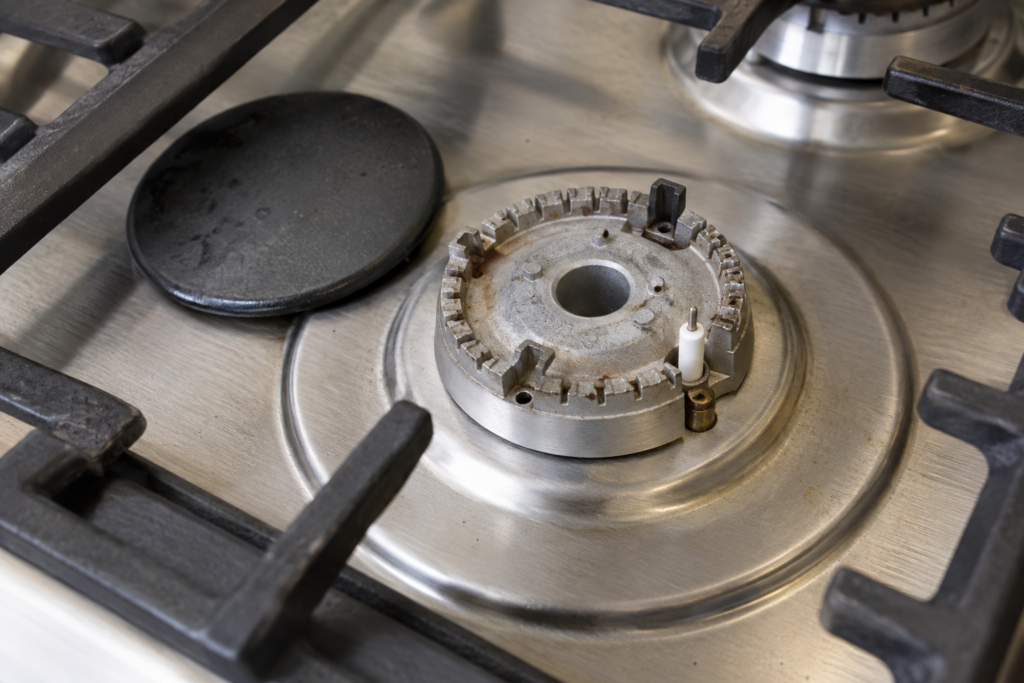
A worn or corroded electrode tip is the single most common cause, because the spark has to jump a very small, precise gap to ignite the gas — and that gap widens or fouls with grease and food residue over years of cooking. A wet electrode after cleaning the cooktop is the second most common cause, and it is worth ruling out before assuming a part has failed.
Can You Check the Igniter Yourself Before Booking a Visit?
Yes, to a safe point. A few checks take a couple of minutes and occasionally solve the problem without a visit at all:
- Dry the burner head and igniter electrode completely if the cooktop was recently cleaned or something was spilled near it.
- Remove the burner cap and check for food residue bridging the electrode gap, which can short the spark before it reaches the gas.
- Listen for a rhythmic click versus silence — a burner that clicks but doesn't light is a different fault from one that produces no click at all.
- Test whether other burners click normally — a single affected burner points at that burner's igniter, while all of them failing together points at the shared module.
- Check the burner cap is seated correctly after cleaning, since a cap sitting slightly off its base can prevent proper ignition even with a healthy igniter.
- Note whether the click sounds weaker than it used to, rather than absent entirely — a fading spark is a useful detail for the technician.
What is not worth doing yourself is removing the igniter module or working near the gas orifice — that is a job that touches the gas supply line and belongs with a technician.
Is It Safe to Light the Burner Manually While You Wait?
Manually lighting a burner with a long lighter while the electronic igniter is diagnosed is a reasonable short-term workaround on most gas cooktops, provided you can smell no gas beforehand and the burner lights promptly once the flame is applied. It is not a reasonable long-term habit, and it is not safe at all if the clicking never stops on its own — a burner sending continuous spark after it has already lit, or a burner that will not stop clicking even when off, points at a stuck control signal rather than a simple worn electrode, and that is worth a visit rather than a workaround.
If you ever smell gas rather than simply hearing a burner fail to ignite, that is a different and more urgent situation — see our guide to gas appliance safety for what to do immediately. A cooktop that clicks endlessly without ever lighting is also worth switching off at the wall rather than leaving to run, since a stuck spark signal is drawing power and generating a small amount of heat at the electrode the entire time it continues.
What Shortens the Life of a Cooktop Igniter
A handful of habits keep igniters working longer between repairs:
- Clean burner caps and electrodes regularly, rather than only after a major spill.
- Dry the cooktop fully after cleaning, especially around each electrode tip.
- Avoid using excessive water or spray cleaner directly on the burner heads, which can work into the igniter wiring over time.
- Reseat burner caps carefully after every deep clean, checking that each one sits flat and square on its base.
- Address a single slow-to-light burner early, before it stops lighting altogether.
- Have the whole cooktop checked if two or more burners are affected around the same time, since that pattern points at the shared module rather than coincidence.
Our guide to cooktop and rangetop maintenance covers the full seasonal routine, including the induction-specific checks that don't apply to a gas igniter at all.
Getting the Igniter Looked At Properly
If this is not the cooktop's first issue, our is it worth repairing a Dacor cooktop guide and our induction cooktop error codes guide are both worth a look. Our Dacor cooktop repair service diagnoses the igniter, the wiring, and the shared spark module together, with the from-$95 diagnostic credited toward the repair once approved. If a burner will not stop clicking even when switched off, cut power to the cooktop and book a visit rather than leaving it running.